
Made in India, Made by Hand — Why Buying Handmade Supports More Than You Know
By Made of Hands | Handmade Crochet & Knit Gifts from Uttarakhand

There’s a phrase that appears on a lot of products in India right now: Made in India. It’s on packaging, on labels, on government campaigns, on social media posts from brands of every size. And it’s a good thing — a country of India’s scale and craft heritage should take pride in what it makes.
But there’s a version of Made in India that goes deeper than a label. A version where made is the operative word — not manufactured, not assembled, not printed. Made. By a specific person, in a specific place, with specific skill that took years to develop. Where the act of making itself is the point, and the object that results carries something of the maker inside it.
That version is what Made of Hands is about. And it’s what this post is about — what really happens, economically and humanly, when you choose to buy handmade in India. The answer is more significant than most people realise.
The Hidden Cost of Cheap, Mass-Produced Products
Before we talk about what buying handmade supports, it’s worth being honest about what buying mass-produced doesn’t.
A ₹99 synthetic keychain bought from a large marketplace seems like a bargain. And in the most narrow, immediate sense, it is. But that price is only possible because of a chain of compressions: compressed wages for factory workers, compressed margins for middlemen, compressed material quality, and a compressed lifespan for the product itself. The true cost is distributed across every link of that chain — paid by the workers who made it, the environment that absorbed its production, and ultimately the buyer who replaces it when it breaks within months.
This is not a guilt trip. It’s just arithmetic. Cheap products have costs. They’re just costs that are paid by someone other than the buyer, and felt somewhere other than the wallet.

What Really Happens When You Buy Handmade in India
When you buy a handmade product from Made of Hands, something very different happens — and it’s worth following the money, quite literally.
Your payment goes directly to us, a small business. From that payment, our artisans in Almora, Uttarakhand are compensated fairly for their time and skill. There is no factory taking margin. No middleman extracting a percentage. No supply chain that circles the globe before landing at your door.

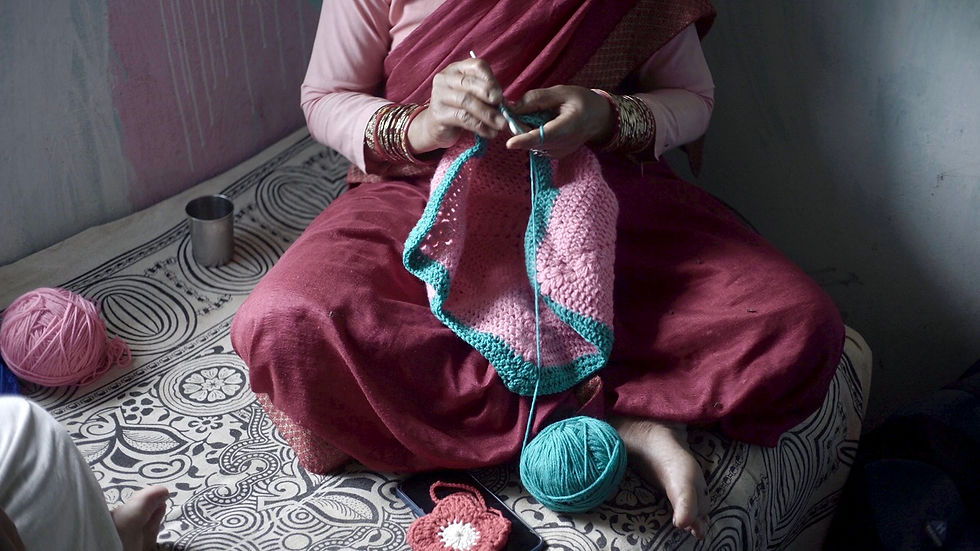
The women who make our crochet keychains, our amigurumi soft toys, our handmade beanies and mufflers — they earn from what they know how to do. Not a minimum wage calculated to keep costs low, but a payment that reflects the hours of skilled work that went into the piece. That money re-enters their local economy: it pays for their children’s schooling, their household groceries, their ability to live with a degree of financial independence in a rural area where formal employment options for women are limited.
One purchase. One product. One woman’s livelihood, made a little more stable.

How One Purchase Supports an Entire Chain of Livelihoods
The direct financial impact is the most visible — but it’s not the only one.
When a handmade business like Made of Hands grows, it creates demand for more skilled craft workers. That demand has a pull effect: it incentivises younger women in the community to learn knitting and crochet, to see these skills as economically valuable rather than merely domestic. It keeps a knowledge tradition alive by making it worth learning.
It also supports the local supply ecosystem — the yarn suppliers, the packaging producers, the logistics networks that serve small businesses in Tier 2 and Tier 3 cities and hill towns. A handmade business that thrives creates ripples that extend well beyond the individual artisan.
Compare this to buying from a large multinational brand, where the profit flows upward and outward — away from the community where the product was made, toward shareholders and headquarters in cities or countries far removed from the act of making. The economic logic of handmade is fundamentally local, fundamentally redistributive, fundamentally human.
The “Vocal for Local” Movement — What It Actually Means for Artisans
India’s vocal for local movement has been widely discussed since 2020 — but it means different things to different people. For large corporations, it’s a branding opportunity. For small handmade businesses, it’s an existential lifeline.
When the Indian government and public figures encourage buying local, the ideal beneficiary is exactly what Made of Hands represents: a small business, run by Indians, employing Indian artisans, using materials sourced in India, producing products that reflect a distinctly Indian craft heritage, sold to Indian customers who want something made with care.
Every handmade woolen sock knitted in a home in Almora is more vocal for local than any large-brand product assembled in an Indian factory with imported materials and profits that leave the country. The scale is smaller. The impact is more direct.
Handmade Products vs Factory Products — A Side-by-Side Comparison
Let’s be concrete about the differences.
Quality and longevity. A handmade product made by a skilled artisan from quality yarn is built to last. A factory product made from synthetic materials at the lowest possible cost is built to a price point. Our Tulip Crochet Tote Bag will outlast three cheap synthetic totes. Our Double Brim Beanie will still fit and feel good in five winters’ time. The cost-per-use calculation almost always favours handmade.

Uniqueness. No two handmade pieces are exactly alike. The slight variations in stitch tension, the natural differences in how yarn behaves between one skein and the next — these are the marks of human making. When you own a Made of Hands product, you own something no one else has in quite the same form.
Environmental footprint. Handmade production is inherently small-batch and low-energy. Our artisans work from their homes using hand tools — no industrial machinery, no high-energy manufacturing processes, no mass transport of goods across hemispheres. The carbon footprint of a Made of Hands product is a fraction of its factory-made equivalent.
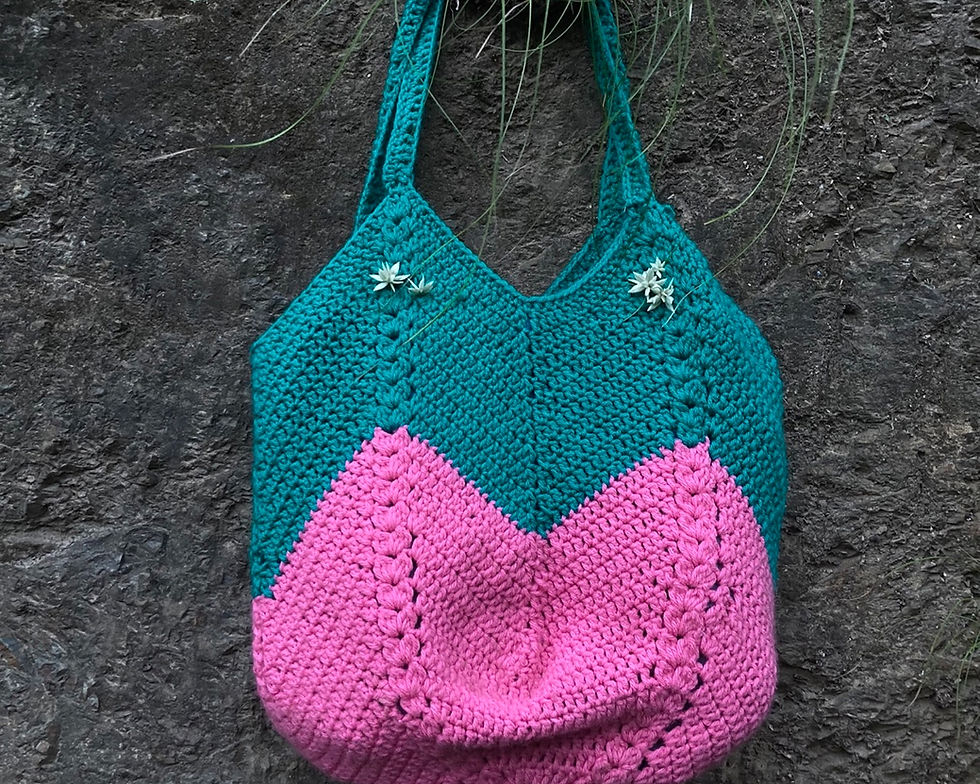
The story. This is perhaps the most undervalued dimension. A factory product has no story — or rather, it has a story that no brand wants to tell. A handmade product from Made of Hands has a story worth telling: a woman in Almora, in the Himalayan foothills, made this. Her skill and patience are in it. You can feel the difference.
How Made of Hands Fits Into the Bigger Picture
We are not a large business. We do not have the marketing budget of a fast fashion brand or the distribution reach of a national retailer. What we have is a clear purpose, a skilled team of women artisans, and a product range — keychains, soft toys, hair accessories, bags, winter wear — that is made entirely by hand, priced honestly, and sold with full transparency about who made it and how.

Every purchase from Made of Hands is a small act in a larger story. The story of Indian handicraft finding its place in a modern economy. The story of women in rural Uttarakhand earning independence through skill. The story of a different kind of consumption — slower, more considered, more meaningful.
You don’t have to buy everything handmade. But the next time you reach for a gift, a new accessory, or something to carry — consider what it would mean to buy something made by hand, in India, by a woman who put real skill and real time into making it just for you.
That consideration is where change begins. And it begins with something as simple as a crochet keychain from a small business in the Himalayan foothills.
Shop the full Made of Hands collection — handmade in India, made by hand, made with purpose — at madeofhands.com/shop
Use code FIRST10 for 10% off your first order.
Made of Hands — Made of love, made of hands.


Comments