
Crochet vs Knitting — What’s the Difference and Why Does It Matter for Your Gift in India?
By Made of Hands | Handmade Crochet & Knit Gifts from Uttarakhand
You’re browsing a handmade shop, you see a soft beanie and a crocheted keychain sitting side by side, and somewhere in the back of your mind a question surfaces: wait — are these made the same way?
They’re not. And understanding the difference between crochet and knitting — two crafts that are frequently confused, even by people who love handmade products — actually changes the way you appreciate what you’re holding, what you’re buying, and what you’re gifting.
At Made of Hands, we use both techniques. Our women artisans from the Himalayan foothills of Almora, Uttarakhand are skilled in both crochet and knitting — and different products in our collection are made using different methods, each chosen deliberately for what that technique does best. This guide explains the difference, clearly and simply, so you can shop and gift with confidence.
What is Crochet? A Simple Explanation
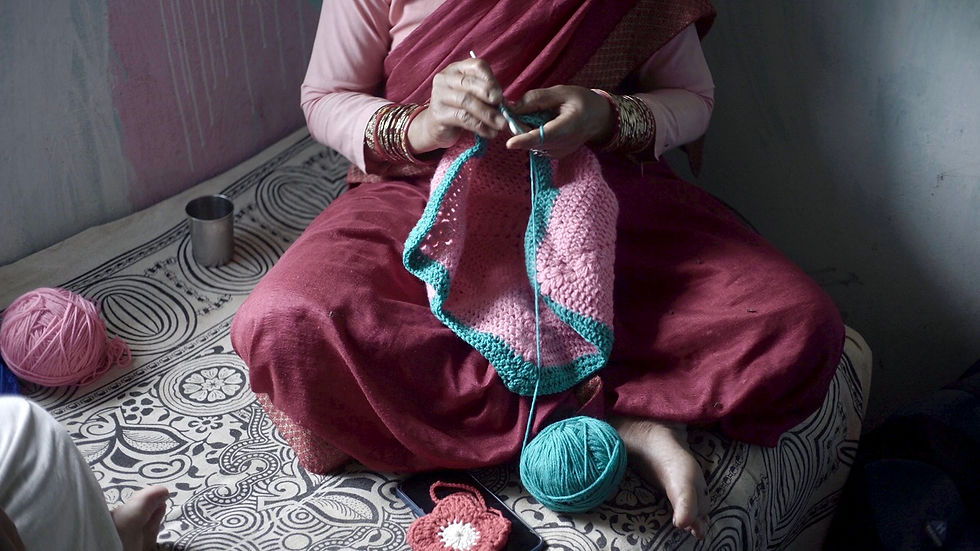
The word “crochet” comes from the French word for hook — and that’s exactly what defines the craft. Crochet uses a single hooked needle to pull loops of yarn through other loops, building a fabric one stitch at a time. Only one active loop is worked at any moment, which gives the crocheter precise control over each individual stitch.
The resulting fabric tends to be slightly thicker and more three-dimensional than knitting — which is exactly why crochet is the technique of choice for amigurumi soft toys, keychains, bags, and accessories that need to hold their shape. When you hold one of our handmade crochet keychains or pick up a crochet soft toy, you’re experiencing the characteristic firmness and structure that only crochet creates.

Crochet also excels at intricate, decorative patterns — the kind of detailed, sculptural work you see in our granny square fingerless gloves and crochet tote bags. Each motif is built stitch by careful stitch.
In short: crochet = one hook, one loop at a time, excellent for structure and shaping.
What is Knitting? And How is it Different?
Knitting uses two or more needles to work multiple loops simultaneously, interlocking them in a way that creates a more elastic, fluid fabric. The resulting textile has a characteristic stretchy quality — that satisfying give when you pull a woolen beanie over your head, or the gentle elasticity of a well-made sock.

This elasticity is why knitting is the superior technique for wearables that need to conform to the body — caps, mufflers, gloves, socks, and scarves. Our handmade woolen beanies, mufflers, and winter socks are knitted — because knitted fabric stretches to fit, breathes comfortably against skin, and drapes naturally in a way that crocheted fabric doesn’t.
Knitting also tends to produce a finer, more uniform fabric surface — the smooth, even texture you see on a well-made beanie or a pair of fingerless gloves.
In short: knitting = two needles, multiple loops, excellent for stretch, drape, and wearable comfort.
Crochet vs Knitting — Key Differences at a Glance
Crochet | Knitting | |
Tool | One hooked needle | Two or more needles |
Fabric feel | Thicker, firmer, more structured | Lighter, stretchier, more fluid |
Best for | Soft toys, bags, keychains, accessories | Caps, mufflers, socks, gloves, scarves |
Shaping | Easier to shape 3D forms | Better for flat, body-conforming fabric |
Speed | Generally faster | Generally slower |
Yarn usage | Uses more yarn | Uses less yarn |
Made of Hands examples | Amigurumi plushies, crochet bags, keychains | Beanies, mufflers, socks, mittens |
Which Technique Makes Better Soft Toys?
Crochet, without question. This is one of the clearest distinctions between the two crafts.
The reason amigurumi — the Japanese art of making handmade stuffed animals — is always crocheted and never knitted comes down to structure. Crochet creates a tighter, more closed fabric that holds stuffing in place without gaps, shapes easily into the round, compact forms characteristic of amigurumi, and produces the firm yet soft texture that makes a handmade soft toy feel so satisfying to hold.
Our entire plushies collection — from the Hoppy Toes frog and Ice Hopper penguin to the Dino-Mite dinosaur and Purrfect Pal cat — is crocheted by our artisans, stitch by stitch. It’s the only technique that produces that characteristic round, sculptural shape with the density needed to hold stuffing firmly and safely.
Which Technique Makes Better Wearables?
Knitting, in most cases — and this is equally clear-cut.
A knitted beanie stretches to fit your head. A crocheted beanie of the same size would not. A knitted muffler drapes softly around your neck and moves with you. A knitted sock conforms to the shape of your foot with every step. The elasticity that knitting produces is not a minor quality — it’s what makes wearable knitwear comfortable, practical, and long-lasting.

Our Double Brim Beanie (₹649), Mikasa Scarf (₹1,199), and our entire range of winter caps and mufflers are knitted specifically because knitting produces the fit, comfort, and warmth that a handmade wearable needs to be genuinely useful — not just beautiful to look at.

That said, crochet has its place in wearables too — our Cat Paw Fingerless Gloves (₹599) and Granny Square Fingerless Gloves (₹599) use crochet for the decorative motifs and structure, showing how both techniques can work together in a single product.
Why Made of Hands Uses Both — And Why That Matters
Many handmade brands specialise in one technique. Our artisans in Uttarakhand are trained and practised in both — which means we can choose the right technique for each product rather than forcing everything into one approach.
A crochet keychain is better crocheted. A woolen beanie is better knitted. A granny square bag benefits from crochet’s structural qualities. A muffler benefits from knitting’s drape. At Made of Hands, the technique always follows the product — not the other way around.
This is what skilled, experienced craft looks like. And it’s what you’re supporting every time you buy something from our shop.
How to Tell if a Product is Crochet or Knitted When You’re Shopping
Not sure which technique was used on a product you’re looking at? Here’s a quick visual guide:
Look at the stitch pattern. Crochet stitches tend to look like small V-shapes or interlocking loops in a more textured, raised pattern. Knit stitches look like a series of smooth, interlocking V-shapes in neat, uniform rows — think the classic look of a cable-knit sweater.
Feel the fabric. If it’s stretchy and light, it’s likely knitted. If it’s firmer and more structured, it’s likely crocheted.
Look at the shape. If it’s three-dimensional and sculptural — like a soft toy or a bag — it’s almost certainly crocheted. If it’s flat and body-conforming — like a cap or a sock — it’s almost certainly knitted.
The Craft Behind Every Made of Hands Product
Crochet vs Knitting difference debate in India or anywhere else in the world is old. Whether it’s a crocheted amigurumi frog made by hand in Almora, or a knitted woolen beanie that fits perfectly and lasts for years — every piece from Made of Hands carries the skill, patience, and pride of a woman artisan who chose the right technique for the right product.
Now that you know the difference, we hope every Made of Hands piece you own — or gift — carries a little more meaning.
Explore our full range of handcrafted crochet and knit products at madeofhands.com/shop — made by skilled hands, made for real life.
Use code FIRST10 for 10% off your first order.
Made of Hands — Made of love, made of hands.


Comments